All organisations need to adapt to changing times, but you can’t do it without strong and committed leadership.
A big thank you to all of you who contacted me to say they had missed my blog recently, my regular musings on businesses in the news: the reason I haven’t posted a blog now for a month or so is that I have just got married and I have been bloglessly happy on honeymoon. Carol and I got married in a Church of England church and it was a wonderful affair; the setting was perfect for the ceremony that my wife and I wanted: it was a wonderfully English country wedding. As a brand, Britain is positioned on heritage and ceremonial and the Church of England has been central to the day-to-day rites of passage ceremonial of births, marriages, and deaths for generations.
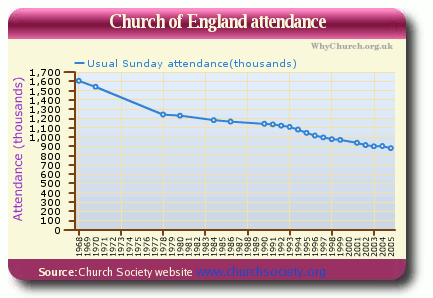
As an institution the Church of England has been in decline for many years: just 800,000 people attend a typical Sunday service these days, which is about half the number who did in the 1960s. The Church claims that “weekly attendance” has stabilised somewhat over the past decade; its use of this weekly statistic, rather than Sunday numbers, was adopted as Sunday attendance dropped embarrassingly low. This reflects a decline in the popularity of traditional dogmatic religion, and the idea of Christianity, in Britain with the most recent census data showing four million less people seeing themselves as Christian in just a decade.
The Church has recently said “there is no single recipe for growth; there are no simple solutions to decline” adding “the Church must retain its young people if it is to thrive”. In the 2011 national census 33M Brits identified themselves as Christian with about a third going to church on a regular basis. There was a 45% rise, during the census period, of people saying they had no religious allegiances. The decline in religion is fastest amongst young people with nearly a third of those under 25 saying they had no religious belief.
Of course, the Church of England is central to British identity and it is both iconic and, in spite of its decline, it is still an influential moderator of social change and one of the stabilising influences on British society. Also, because of its connection with the State, it has a rather political role that is only loosely coupled to its active engagement with individual churchgoers: it remains part of the glue that holds our society together. However, from a purely business perspective I am sure that the Church is wrong and that there is, in fact, a lot that could be done, it is just very hard to do for an organisation that has failed to respond in any meaningful way to dramatic social change.
Without much damage to its more political role in Britain, I’d encourage the Church to: focus more on inclusive activity driven by its beliefs rather than its more traditional role as a polemicist; to redefine its Ministry as active engagement rather than aloof leadership; to segment its market around benefits and target several of the most obvious benefit segments; and most of all position itself in a way that is more in tune with young people. Most importantly, it needs to more clearly recognise and more directly address the business(s) it is actually in: pageantry and ceremonial; personal rites of passage; social inclusion and community; and moral, emotional and physical support. There is no doubt that most of us agree with the basic tenants of Christianity, even if we aren’t Christians, and the Church could renew itself by adopting a more active and modern modus operandi.
I think it could be done, given the scale, history and balance sheet strength of the Church, however, there are two things that stand in the way: there is no political will for meaningful change, as its role as a brake on radical change in Britain is considered to be too important; and, consequently perhaps, the Church just doesn’t have the leadership, organisational structure, or competence to do any of this and nor will it until there is political will for change. I think that’s a pity because Britain would benefit a lot from an updated Church of England.
Mark